The problem
I built AI Service end to end for a friend who creates faceless Instagram content. The goal was a single place to prepare creative assets instead of switching between several separate AI tools. I developed the website, backend, model integrations, and the project-based interface that brings those workflows together.
What I built
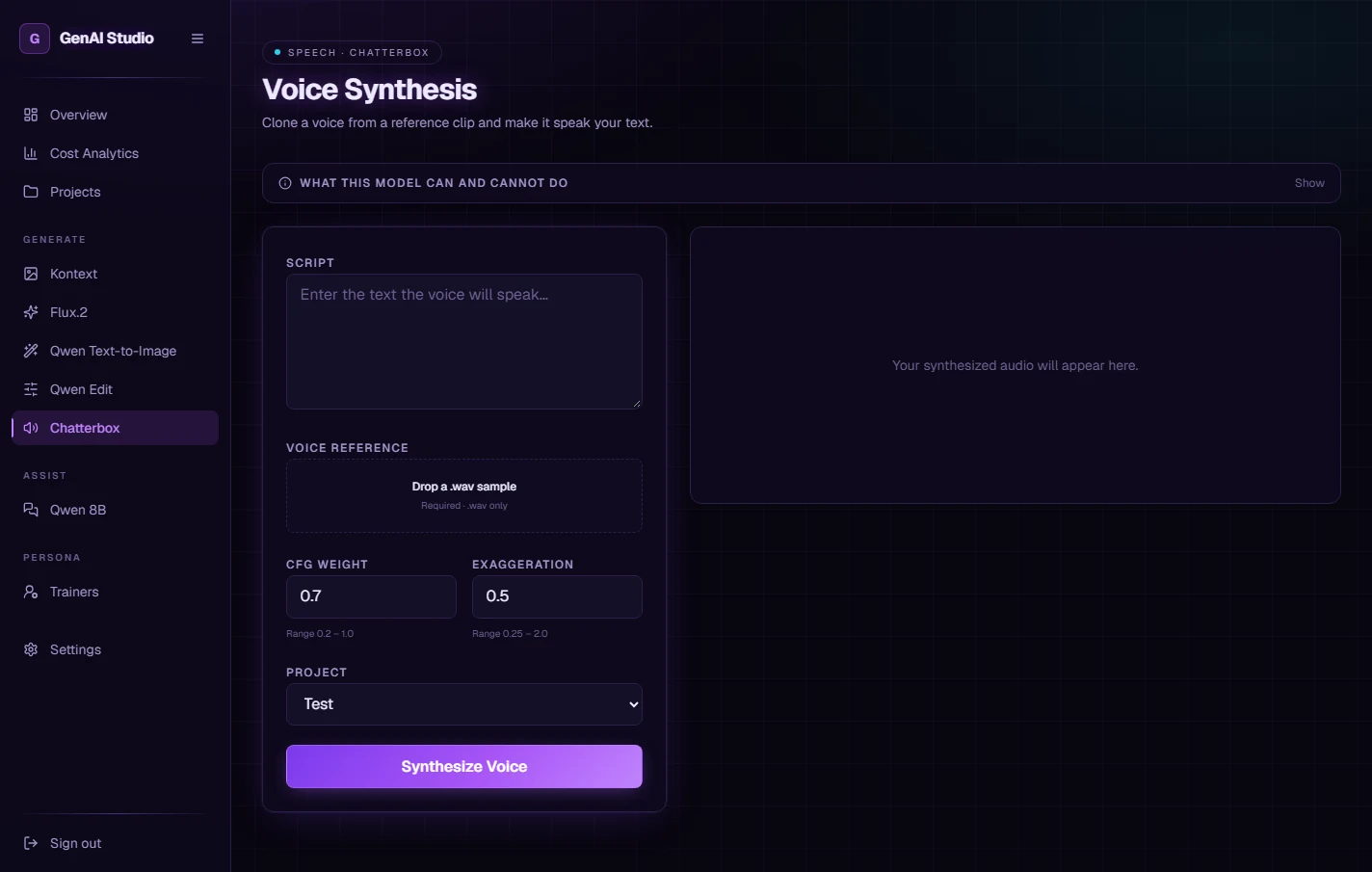
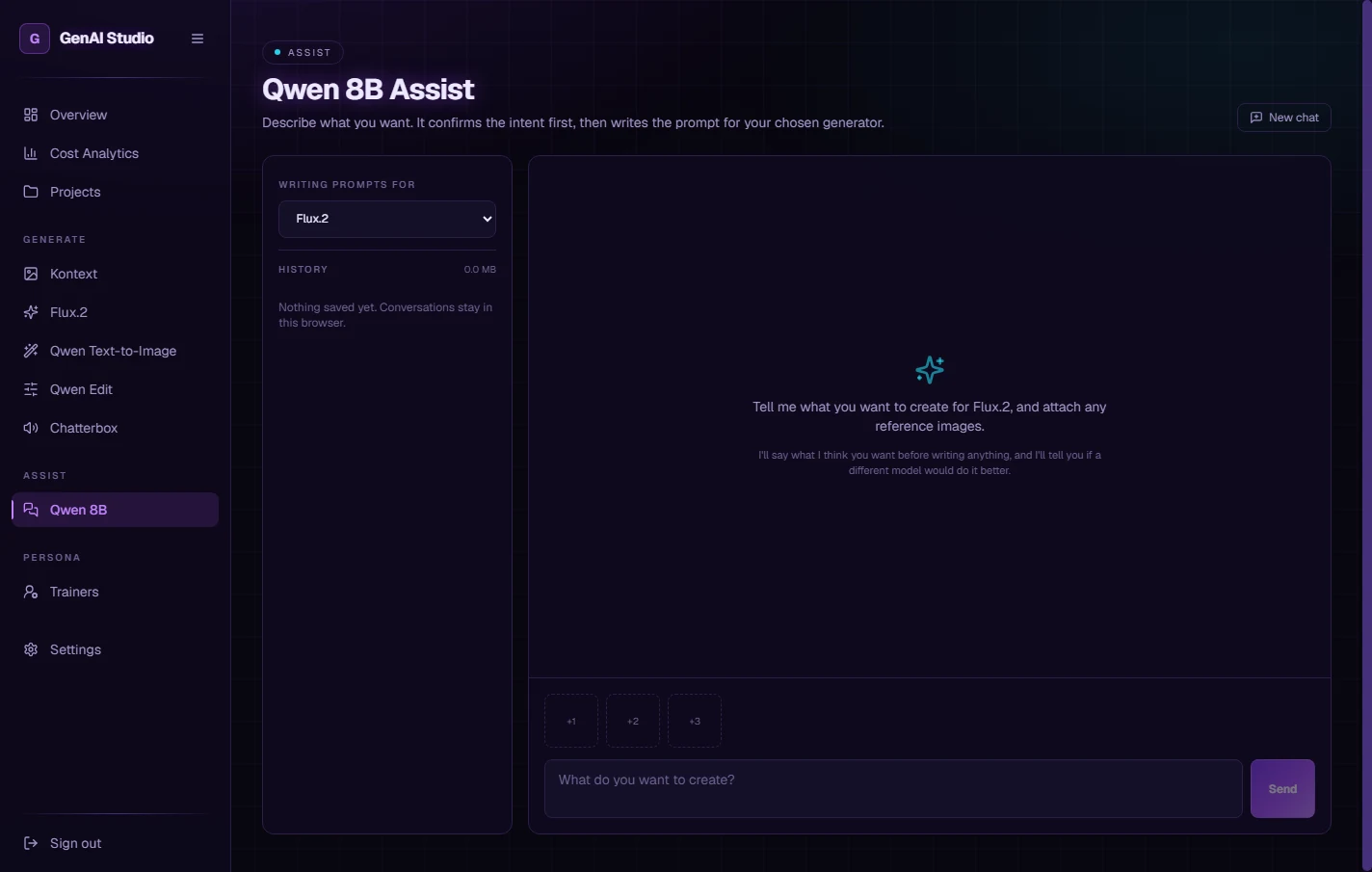
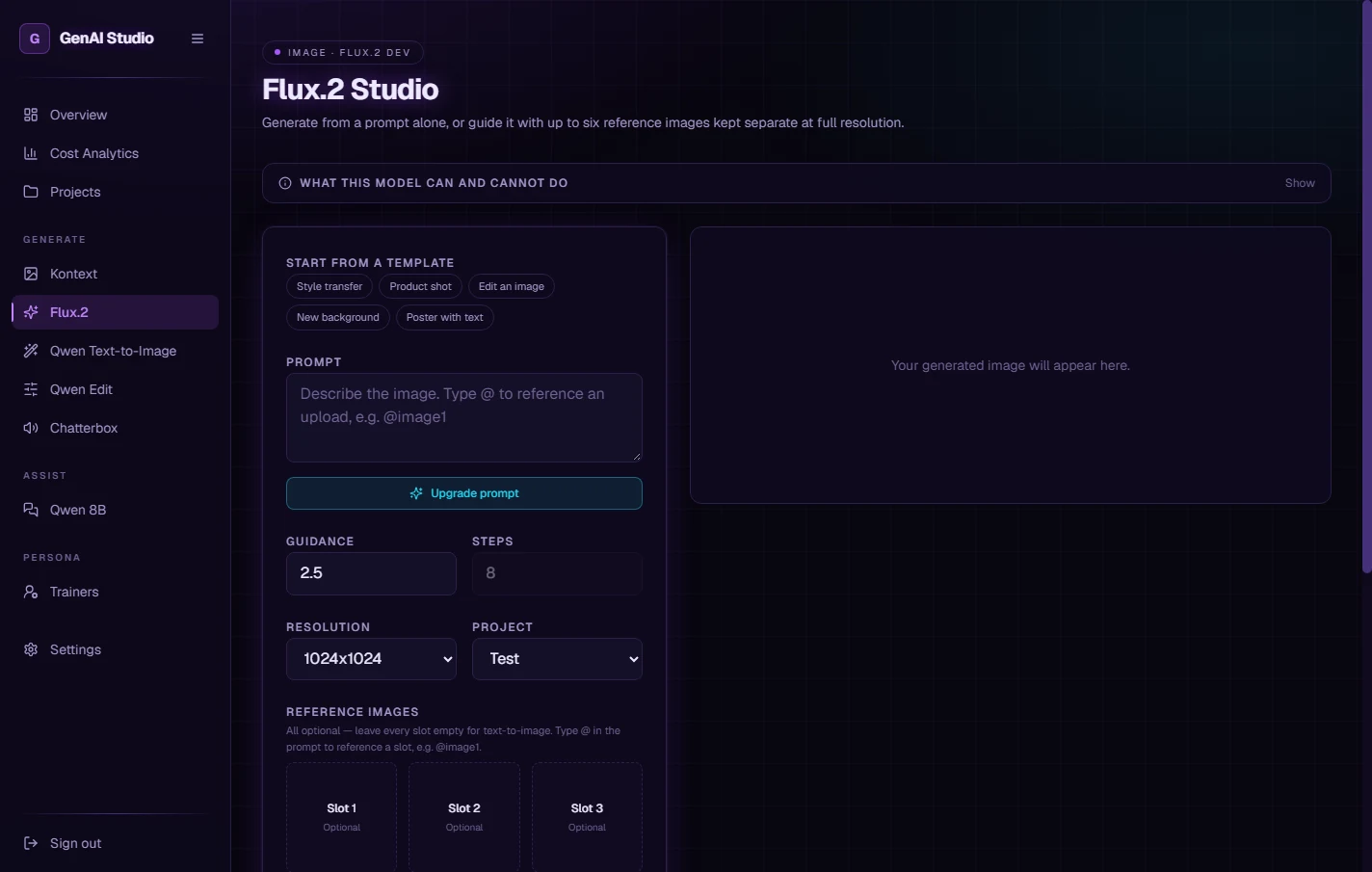
The current implementation includes FLUX.2 Dev for image generation, FLUX.1 Kontext Dev for image editing, Qwen Image generation and editing, a Qwen3-VL-8B prompt assistant, and Chatterbox for speech generation. The application also has persona tools, including LoRA training paths, plus settings and usage views. A Next.js frontend talks to Python services on Modal, where a web gateway and separate model workers handle the different workloads.
- A central engineering problem was making slow GPU jobs feel manageable in an interactive product. The backend records job state while workers run, and the interface can show progress rather than leaving the creator waiting without feedback. Integrating open-source models also meant balancing output quality, GPU usage, and inference cost as I added new capabilities. That structure gives me a place to add more models as the creator's needs and feedback evolve.